
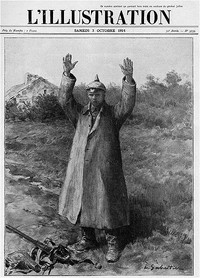
L'Illustration, No. 3735, 3 Octobre 1914 by Various
This isn't a story with a plot in the traditional sense. L'Illustration, No. 3735 is a snapshot, a 100-page weekly magazine published in Paris on October 3, 1914. The 'story' is the unfolding reality of World War I, barely two months old. The magazine was trying to do its normal job—report news, show pictures, entertain—but the war had swallowed everything.
The Story
You open it and are immediately pulled in two directions. The cover is a stunning, colorful painting of a French soldier standing guard, heroic and steadfast. But then you turn the page. The articles describe the strategic situation: the German advance halted at the Marne, the frantic movement of troops northward. There are detailed maps with arrows and lines. But mixed in are the human details: photos of muddy trenches, soldiers huddled in makeshift shelters, refugees with all their belongings in carts. Advertisements for 'Marinello' soap and 'Oxo' beef extract sit beside illustrations of new military aircraft and lists of the wounded. One moment you're looking at a technical diagram of a howitzer, the next at a fashion sketch. The overall narrative the magazine is trying to tell is one of national resolve and eventual victory, but the raw photographs and dispatches tell a more complicated, gritty, and immediate truth.
Why You Should Read It
I loved this because it removes the filter of hindsight. We know how the war ended and its staggering cost. But in October 1914, nobody knew. Reading this, you feel that uncertainty. The tone is a bizarre mix of somber reporting, boosterish patriotism, and everyday normalcy. It shows how a society on the home front was processing a trauma in real-time, clinging to routine even as the front pages showed their world collapsing. The most powerful parts are the photographs. They're grainy and stark, showing exhaustion and dirt, which contrasts wildly with the clean, heroic art commissioned for the covers and illustrations. That gap between image and reality is where the real history lives.
Final Verdict
This is perfect for anyone tired of dry history texts. If you're fascinated by World War I, this primary source is invaluable. It's also great for people interested in media, journalism, or how societies tell stories to themselves during a crisis. You won't get a neat narrative, but you'll get something better: a direct, unfiltered, and deeply human connection to a specific week in one of history's most pivotal moments. Just be prepared—it's more haunting than any textbook.
This digital edition is based on a public domain text. Feel free to use it for personal or commercial purposes.
Jennifer Rodriguez
1 year agoWithout a doubt, the character development leaves a lasting impact. Absolutely essential reading.
Donald Rodriguez
1 year agoWithout a doubt, the author's voice is distinct and makes complex topics easy to digest. One of the best books I've read this year.
George Clark
10 months agoHaving read this twice, the emotional weight of the story is balanced perfectly. Truly inspiring.