
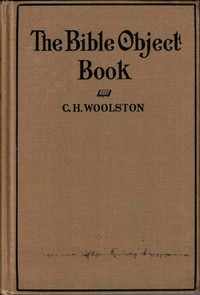
The Bible object book : A book of object lessons which are different, written…
First published in the early 1900s, The Bible Object Book isn't a novel or a biography. It's a collection of short, standalone lessons. C.H. Woolston, a pastor known for his creative Sunday school methods, starts each chapter with a simple, physical object. A lamp, a mirror, a nail, a piece of bread. He then connects that object directly to a Bible story, verse, or principle, building a practical and memorable metaphor around it.
The Story
There's no continuous plot. Instead, think of it as a series of clever, object-based parables. One lesson might use a key to talk about the promises of God being unlocked. Another might use a sponge to discuss how we absorb influences—both good and bad—from the world around us. A lesson on honesty could revolve around a plumb line, and a talk on guidance might use a compass. Woolston's writing is straightforward and earnest, clearly aimed at teachers and parents looking for engaging ways to share biblical concepts, especially with young people. The 'story' is in watching an ordinary item transform into a vessel for a bigger idea.
Why You Should Read It
I picked this up mostly out of historical curiosity, but I was struck by its creativity. In our digital age, there's something grounding about lessons built on touchable, physical stuff. Woolston had a real gift for observation. His approach feels hands-on and accessible, stripping away jargon to get to the heart of a message. While the language and some references are definitely of its time, the core method—using the familiar to explain the profound—is timeless. It made me look at everyday items in my own home differently. Beyond its original religious purpose, it's a neat study in analog-era communication and creative teaching.
Final Verdict
This book is a niche gem. It's perfect for Sunday school teachers, youth leaders, or homeschooling parents looking for classic, visual lesson ideas. It's also great for readers interested in the history of religious education or vintage teaching methods. If you enjoy sermons or talks that use strong, concrete imagery, you'll appreciate Woolston's skill. It's probably not for someone seeking deep theological debate or a modern narrative. But if you want a short, imaginative, and practical book that turns a pocketful of everyday objects into a toolbox for lessons, this century-old manual still has some sparks of wisdom.
This is a copyright-free edition. It is available for public use and education.
Barbara Rodriguez
1 year agoI didn't expect much, but the pacing is just right, keeping you engaged. A true masterpiece.
Nancy Wilson
1 year agoBeautifully written.
Anthony Garcia
6 months agoVery interesting perspective.
Kimberly Young
2 years agoEssential reading for students of this field.


Sarah Lee
2 years agoHonestly, it creates a vivid world that you simply do not want to leave. Thanks for sharing this review.