
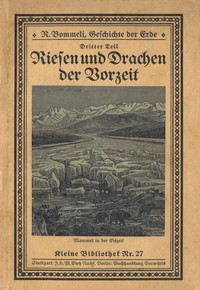
Riesen und Drachen der Vorzeit. Geschichte der Erde, Dritter Teil by R. Bommeli
Published in 1902, Riesen und Drachen der Vorzeit is the third installment in Rudolf Bommeli's ambitious Geschichte der Erde (History of the Earth) series. This isn't a straightforward textbook. Instead, Bommeli acts as a guide through deep time, using the fossil record as his primary source material.
The Story
The book doesn't have a plot in the traditional sense. Its narrative is the story of Earth itself, long before humans. Bommeli walks us through the world of prehistoric life, focusing on the most spectacular finds of his day: the massive skeletons of dinosaurs and the enormous bones of Ice Age mammals. He describes these creatures not just as scientific specimens, but as the possible real-world inspirations for the giants and dragons that populate global myths and fairy tales. The 'conflict' is the intellectual puzzle of connecting hard evidence—fossils—with the soft, persistent memory of folklore. How did ancient peoples interpret the huge bones eroding from cliffs? Bommeli pieces together a world where science and legend might share a common, very old root.
Why You Should Read It
What makes this book special is its perspective. Reading it today is a double journey: you're learning about prehistoric life, but you're also seeing how someone in 1902 understood it. The science has moved on tremendously, and that's part of the charm. You get to witness the early, imaginative stages of paleontology. Bommeli's enthusiasm is contagious. He isn't just listing facts; he's trying to rebuild a lost world and understand its impact on the human psyche. It’s a reminder that science starts with wonder and big questions. The book captures a specific moment when the lines between hard science and cultural anthropology were beautifully, and productively, blurred.
Final Verdict
This is a niche read, but a deeply rewarding one. It's perfect for history of science buffs, paleontology enthusiasts curious about the field's roots, and anyone who loves the intersection of myth and reality. It’s not a modern reference book, so don't come for updated facts. Come instead for the atmosphere, the vintage illustrations, and the unique voice of a passionate writer trying to bridge the gap between stones and stories. Think of it as historical nonfiction about prehistory, written over a century ago. If that idea intrigues you, you'll find it absolutely captivating.
This text is dedicated to the public domain. It is now common property for all to enjoy.
Jennifer Hernandez
9 months agoRecommended.
Elizabeth Lewis
1 year agoIf you enjoy this genre, the depth of research presented here is truly commendable. A true masterpiece.
Thomas Young
7 months agoWithout a doubt, the clarity of the writing makes this accessible. Highly recommended.
Elijah Flores
5 months agoVery interesting perspective.

James Hernandez
1 year agoA bit long but worth it.